Every morning, the same ritual: open the closet, hesitate between comfort and style, then opt for the first accessible t-shirt. Dressing your children with style and creativity doesn’t require a huge budget or a degree in fashion design. A few concrete principles are enough to create outfits that reflect their personality, withstand their active days, and stand out effortlessly.
The principle of the colorful capsule wardrobe for children
You may have noticed that some children’s wardrobes always seem coordinated, no matter the mix? The secret often lies in a pre-selected color palette.
The idea is simple: select three to five colors that combine well. A navy blue, a mustard yellow, an off-white, and a brick red, for example. Every piece of clothing bought or kept should fit into this palette. The result: all items match, even if chosen randomly on a rushed Monday morning.
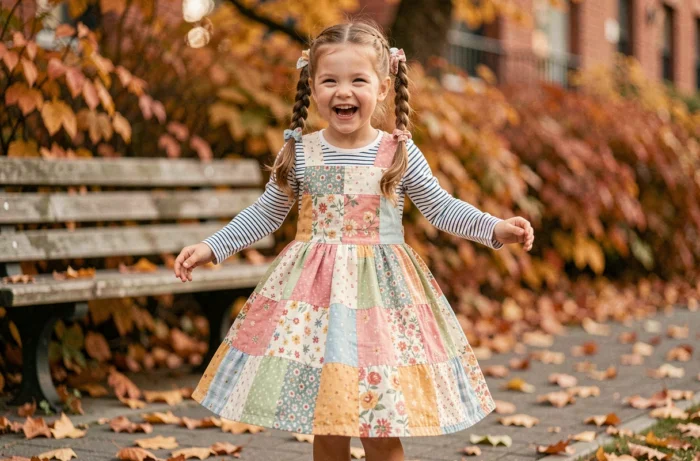
This approach reduces unnecessary purchases. Instead of accumulating isolated pieces (the discounted neon t-shirt, the fancy pants given as a gift), you build a cohesive set. Fun patterns, stripes, or prints are welcome, as long as they incorporate at least one color from the core palette.
To discover children’s clothing designed with this mindset, featuring well-tailored cuts and easy-to-match colors, a useful resource is: https://jolis-momes.fr/.
Children’s clothing with patterns: daring to mix without a false note
Mixing patterns scares many parents. A striped t-shirt with checkered shorts, is that too much? Not necessarily, if the scales differ.
Pairing a large pattern with a fine one avoids visual overload. A shirt with big flowers works with pants that have fine stripes. Two prints of the same size, on the other hand, create a messy effect.
The other rule that simplifies everything: keep a common thread through color. If the top features green and white, a pair of green polka dot bottoms on a neutral background naturally extends the outfit. Children love patterns, animals, and geometric shapes. Letting them choose one print per outfit channels their desire for whimsy while maintaining a cohesive look.
Three pattern combinations that always work
- Fine stripes (like a sailor shirt) with a solid or micro-dotted bottom: the classic revisited, suitable for school as well as outings
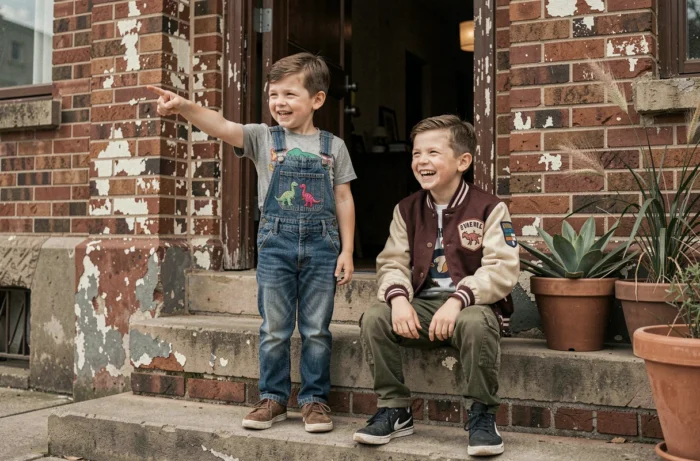
- Floral or tropical print on top, paired with raw denim or a solid linen short: the strong pattern remains isolated and catches the eye without overwhelming
- Large checks (flannel-type shirt) worn open over a graphic t-shirt with a small logo: layering creates depth without visual conflict
Everyday children’s style: focus on accessories rather than multiplying clothing
A well-chosen accessory transforms a basic outfit into a personalized look. It’s often more effective (and cheaper) than buying yet another dress or an extra pair of pants.
A scarf, a bandana, or a pair of colorful socks are enough to change the look of an outfit. Children take ownership of these small elements more easily than a complete outfit. They become active participants in their style without the parent losing control of the final result.
Why this choice rather than a full garment? Because an accessory can be added or removed depending on mood, weather, or activity. An embroidered cap, a patterned backpack, mismatched hair clips: these details tell a story without weighing down the wardrobe.
High-impact accessories for children
- Playful patterned socks (animals, fruits, shapes): visible with low-top sneakers, they add a fun touch to a pair of jeans and a plain t-shirt
- Bandana tied around the wrist or in the hair: a square of fabric is inexpensive and changes the energy of an outfit in seconds
- Brightly colored suspenders or braided belts: a structuring detail that gives a polished silhouette even on simple clothing
- Canvas hat or reversible bucket hat: practical against the sun, it adds real character to a summer outfit
Children’s fashion and second-hand: more creativity thanks to unique pieces
Second-hand clothing is not just for saving money. They open a creative playground that standardized new items struggle to offer.
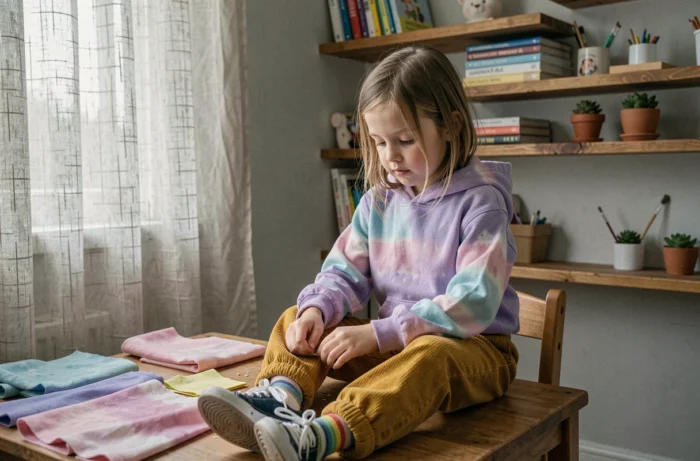
In thrift stores or on resale platforms, you come across cuts, embroideries, or color combinations that no current brand offers. A vintage piece for children becomes a strong item around which to build an outfit. A faded denim jacket from previous years, a hand-knitted cardigan, a corduroy overall: these finds bring character.
Since July 2026, the European regulation on ecodesign (EU 2024/1781) prohibits large companies from destroying their unsold textiles, including children’s clothing. This measure feeds destocking channels and second-hand markets with new or nearly new pieces at reduced prices. The selection of creative and affordable children’s clothing has never been broader.
This approach also works in reverse: selling or donating what children no longer wear frees up space for pieces that match their current style, without accumulation.
Dressing a child with originality ultimately relies on a few reflexes: a defined color palette, patterns mixed methodically, accessories that personalize, and an openness to second-hand to find unique pieces. Style is built in small touches, not through massive purchases. Children, in turn, primarily remember the joy of choosing what they wear each morning.