
A rainy Saturday with three children under ten, a teenager who refuses to leave their screen, and two visiting grandparents: we all know that moment when finding an activity that suits everyone feels like a diplomatic negotiation. There is no shortage of leisure activities in France, but the real challenge is choosing those that actually work for a group with opposing desires.
Intergenerational activities: the format that solves the heterogeneous group problem
When organizing an outing for a group that includes children, adults, and seniors, the classic reflex is to look for the lowest common denominator. We often end up at a restaurant or in front of a movie. Several recent local initiatives are changing the game by offering intergenerational formats designed for social connection, not just for passing the time.
Events like the Blue Week or intergenerational game festivals schedule workshops where the rules are accessible from age six but strategic enough to engage an adult. We’re talking about cooperative board games, sensory trails, and collective creations.
The advantage of these formats is that they don’t require everyone to have the same physical level or patience. A grandparent can participate while seated, and a child can run between tables. To find this type of event near you, you can check leisure activities on Ce Qu’il Faut Savoir and filter by region.
Family leisure at home: going beyond salt dough
Lists of activities to do at home often revolve around the same suggestions: modeling clay, coloring, salt dough. It’s useful for toddlers, but it doesn’t hold attention for an entire afternoon when there’s also a twelve-year-old in the living room.
Workshops that work for children over six
What works better with older children are activities that produce a tangible result or involve a challenge. Here are some concrete ideas that have proven effective:
- A home escape game, with puzzles adapted to each age group (the youngest look for clues, the older ones decode). Free printable kits can be found online.
- A cooking workshop with a specific goal (macarons, fresh pasta, vegetarian sushi), where each participant manages a step according to their ability.
- A DIY session focused on results: building a cardboard fort, making a functional kite, assembling a terrarium.
The activity lasts longer when it has a visible goal. A free drawing loses interest in twenty minutes. A drawing intended to decorate a wall or become a postcard keeps attention.
Outdoor outings: choose based on constraints, not the catalog
We tend to start from the offer (zoo, amusement park, hike) rather than the actual constraints. The constraints often include: how long the journey takes, what budget is available, what physical condition the group is in, and what the minimum age is.
Outdoor activities suitable for families with young children
With children under five, the range of options shrinks. Regional natural parks often offer short marked trails accessible with all-terrain strollers. Educational farms also work well, as contact with animals captivates nearly all ages.
For families with teenagers, moderate thrill activities (tree climbing, canoeing, beginner via ferrata) offer a good compromise. The teenager finds a physical challenge, while the parents can participate without needing prior training.
Accessible sports activities without equipment
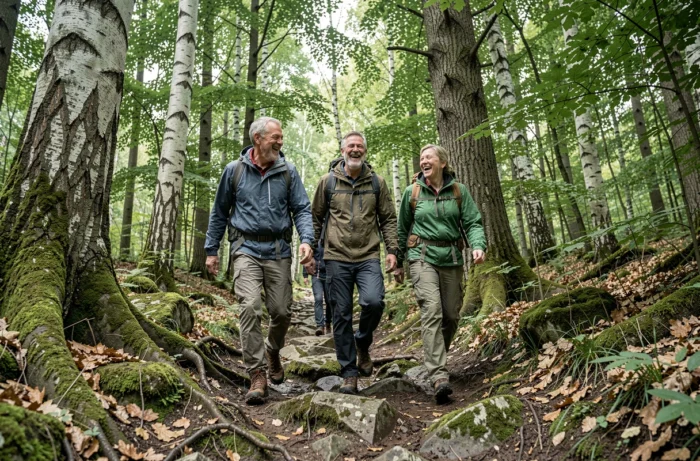
No need to invest to get started. Orienteering in a municipal park costs nothing. Disc golf, which is growing in several French cities, requires just a simple frisbee. Nordic walking needs poles, but many sports associations lend them during discovery sessions.
The pass’Sport, renewed for the current season, remains a lever to reduce club registration costs. Feedback varies on the actual accessibility of the program depending on the organizations, but it covers a significant part of the fee for eligible youth.
Cultural activities and creative workshops: worth the trip
Municipal libraries regularly organize free workshops (storytime for little ones, writing workshops for teens, book clubs for adults). It’s an underrated leisure option because it lacks glamour, but the free access and proximity make it a logical choice when looking for a regular activity.
Supervised creative workshops (pottery, sewing, engraving) offer classes accessible from eight or ten years old in many cities. The one-off workshop format, without annual commitment, allows for testing before signing up.
For seniors and people with disabilities, some municipalities like the City of Paris maintain free or adapted pricing offers in dedicated clubs and municipal sports associations. This angle of financial accessibility is rarely highlighted in activity guides, even though it conditions actual participation.
Concrete criteria for choosing a suitable leisure activity
Rather than an exhaustive list, here are the questions that effectively filter options:
- Who is the youngest and the oldest in the group? The age gap determines the format (cooperative, parallel, or each doing their own activity in the same place).
- What is the realistic budget, including transport? A trip to an amusement park for five people can represent a significant budget, while a hike followed by a picnic costs only the fuel.
- Indoor or outdoor? If the weather is uncertain, prioritizing an indoor backup plan avoids frustration.
- One-off activity or regular practice? Local associations often offer free trial sessions before commitment.
The right leisure activity is not the most spectacular. It’s the one where no one checks their watch after half an hour, where each participant finds a role, and where everyone leaves wanting to do it again.


