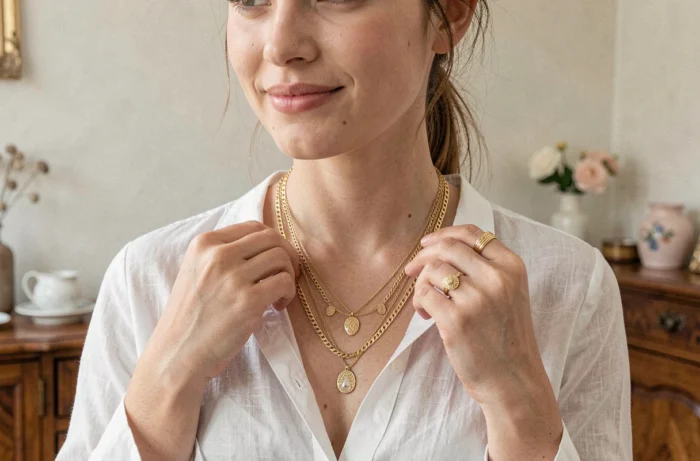
Costume jewelry is no longer just about cheap accessories meant to complete an outfit. The segment has gained in technicality, both in materials and finishes, and current trends reflect this upgrade in quality. We observe clear guidelines for upcoming collections, driven by stricter regulatory requirements and a strong taste for pieces with a strong personality.
Nickel Compliance and Skin Safety of Costume Jewelry
This topic is rarely addressed in trend articles, and that’s a mistake. In February 2026, the EU Safety Gate reported several recalls of rings, necklaces, earrings, and sets for non-compliance with the nickel release limits set by the REACH regulation.
The numbers speak for themselves: a recalled ring in France showed a release rate of 2.9 µg/cm² per week, while the regulatory limit is set at 0.5 µg/cm² per week for jewelry in prolonged contact with the skin, and 0.2 µg/cm² per week for parts inserted in pierced areas.
This situation has direct consequences on material choices. Brands that work with 316L stainless steel, nickel-free brass, or zamak with PVD coating are better positioned to meet these controls. We recommend systematically checking REACH compliance before any purchase, especially for earrings and costume piercings.
The technical testing standards (EN 1811:2023 and EN 12472:2020) now more strictly frame the evaluation protocols. A trendy costume jewelry piece in 2026 is primarily a piece that does not cause contact dermatitis. Brands like Bijoux D’Ange incorporate this requirement into their selection, which is a selection criterion that mainstream articles overlook.

Materials and Finishes Defining Costume Jewelry Trends
PVD coating is gradually replacing traditional gold plating. This vacuum deposition process produces a layer that is more resistant to wear and corrosion. On bracelets and necklaces worn daily, the difference in longevity is noticeable compared to simple gold flash.
Mass-dyed resin is making a strong comeback in rings and earrings. It allows for color effects that are impossible to achieve with natural stones at this price level, while also offering a pleasant lightness on bulky pieces.
Freshwater Pearls and Reconstituted Mother-of-Pearl
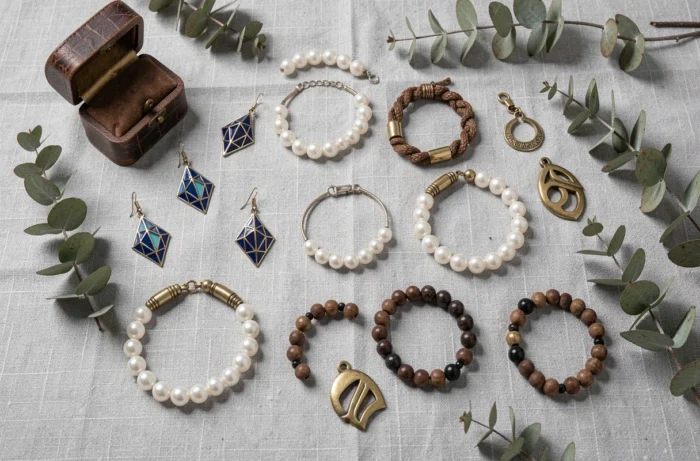
Pearls remain a classic, but their treatment has evolved. Reconstituted mother-of-pearl, obtained by compressing shell powder, offers an organic look at a lower cost. On costume necklaces, the mix of freshwater pearls and gold-plated links creates a material contrast that dominates current collections.
We also observe a return of hammered and brushed textures on metals, in contrast to the mirror finishes that have long prevailed. This aesthetic choice better masks everyday micro-scratches, a functional as well as stylistic advantage.
Layering and Stacking Costume Jewelry: Technical Rules
The stacking of bracelets, rings, and necklaces remains the dominant trend, but it follows precise principles to avoid a cluttered look.
- Vary the chain thicknesses on layered necklaces: a fine chain (1 mm) paired with a medium chain (3 mm) creates a readable visual hierarchy
- Limit the mixing of finishes to a maximum of two per body area (wrist, neck, ears) to maintain color coherence
- Favor a unique focal point per outfit, whether it’s a statement ring or dangling earrings, with other pieces remaining discreet
On earrings, the asymmetrical trend is confirmed. Wearing two different but coordinated models (same metal, same color palette) requires a sense of composition that costume jewelry designers exploit by offering mismatched pairs sold together.
Character Pieces and Bold Costume Jewelry for Everyday Style
Volumes are increasing. Cocktail rings with colored cabochons, thick hoops, and rigid cuffs are no longer reserved for special occasions. The statement costume jewelry is now worn during the day, including in professional contexts.
This evolution is explained by a change in the perception of costume jewelry. The stigma of “fake” fades when the piece clearly asserts its own identity, without trying to imitate fine jewelry. A large turquoise resin ring does not try to be an emerald; it claims its status as a style object.
Dominant Color Palette
Warm gold (champagne tone rather than bright yellow) dominates collections, followed by brushed silver. Saturated colors, emerald green, cobalt blue, garnet red, appear on costume stones and enamels. Matte black returns on graphic pieces, particularly geometric earrings.
Two-tone gold and silver jewelry on the same piece is gaining ground. This mix, long considered a style faux pas, is now a marker of modernity claimed by designers.
Care and Durability of Trendy Costume Jewelry
Well-maintained costume jewelry retains its appearance for several seasons, which changes the game in terms of value for money.
- Always remove jewelry before contact with water (shower, pool, sea), perfumes, and creams
- Store each piece separately in a fabric pouch to avoid friction between metals and coatings
- Clean with a dry microfiber cloth, never with abrasive products or alcohol that can damage surface treatments
A well-maintained PVD coating lasts significantly longer than standard gold plating. This is a decisive argument for investing in higher-quality costume pieces rather than multiplying low-cost purchases.
The costume jewelry market is entering a phase where perceived quality aligns with technical quality. Current trends value assertive pieces, materials compliant with European standards, and durable finishes. Choosing costume jewelry in 2026 means balancing style, safety, and longevity, three criteria that are no longer contradictory.


