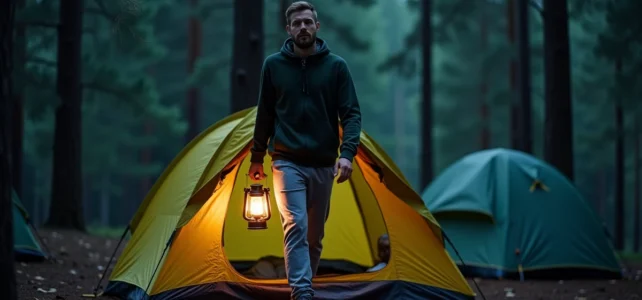
Nocturia, which means the need to get up at least once a night to urinate, significantly disrupts sleep. When camping, this nighttime urge presents an additional problem: getting out of a sleeping bag, opening a tent, and walking on dark, uneven ground to reach sometimes distant toilets. Managing the urge to urinate at night while camping requires preparation that combines fluid management, campsite organization, and the choice of suitable equipment.
Risk of nighttime falls while camping: an underestimated danger
Medical sources associate nocturia with an increased risk of nighttime falls, particularly in cases of darkness, ground obstacles, or uneven terrain. A campsite combines these three factors: stakes, guy lines, roots, elevation changes, and wet ground.
Prevention relies on organizing the space around the tent. Clearing a path between the tent and the relief area before nightfall significantly reduces the risk of tripping. A headlamp, placed in a side pocket of the sleeping bag or in the tent’s storage pocket, should be accessible without fumbling.
For those camping in groups, marking the path with a small light marker (chemical glow stick, or simply a water bottle placed on a nightlight) also helps avoid stepping on neighbors’ gear. This type of anticipation, common among experienced hikers, makes the difference between an ordinary nighttime outing and a sprained ankle on a poorly planted stake.
Before heading out, it’s useful to discover Agence Voyage Tourisme to complement this advice with detailed field feedback on managing nights while camping.
Reducing the urge to urinate at night: fluid management and diet at camp
The most effective reflex to limit nighttime awakenings is to reduce liquid intake two to three hours before bedtime. While camping, the temptation to drink a lot in the evening is strong, especially after a day of hiking or in warm weather. It’s better to concentrate hydration in the early afternoon and gradually decrease.
Some beverages worsen the situation. Caffeine and alcohol have a direct diuretic effect on the bladder. A coffee or a beer by the fire after dinner almost guarantees an additional nighttime awakening. Replacing them with a light herbal tea (in small amounts) or simply warm water makes a real difference.
On the food side, very salty meals promote water retention during the day, which is released at night in the form of urine. Preparing a camping dinner lower in salt (plain pasta instead of instant soup, for example) helps space out awakenings.
- Drink the majority of your water ration before 5 PM, then gradually reduce
- Avoid coffee, black tea, and alcohol in the evening
- Urinate just before slipping into the sleeping bag, even without a pressing urge
- Favor a low-salt dinner to limit nighttime diuresis
Nocturnal urination without leaving the tent: practical material solutions
When temperatures drop or the campsite is far from sanitary facilities, having a container in the tent avoids exposure to the cold and the risk of falling. Lightweight hiking forums (like Randonner Léger) extensively document this practice, which is far from anecdotal.
The wide-mouth bottle
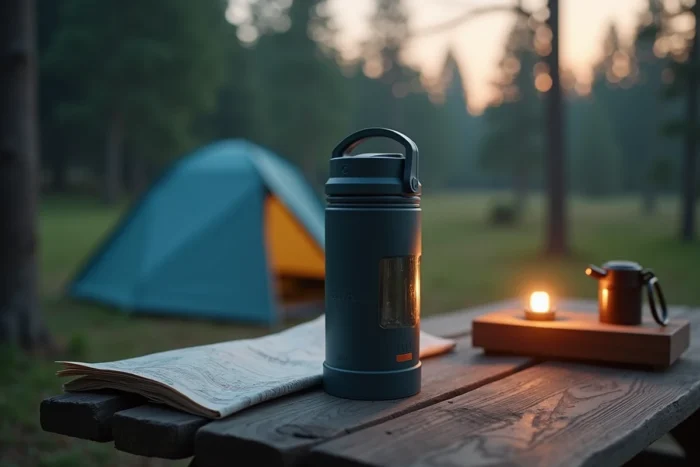
A Nalgene-type bottle (wide mouth, rigid plastic, leak-proof cap) serves as an effective nighttime urinal for men. Marking this bottle with colored tape prevents any confusion with the drinking water bottle, a classic mishap in camping. A one-liter capacity is sufficient for a night.
The collapsible bucket or portable toilets
For superior comfort, collapsible camping toilets (bucket type with a waterproof and absorbent bag) offer a solution suitable for everyone. Some compact models fit into the tent’s vestibule. Their principle is similar to that of dry toilets: no water, a double plastic bag, and an absorbent material (sawdust, plant litter, gelling powder) to neutralize odors and facilitate waste disposal.
Portable female urinals
Women can use a female urinal made of silicone or rigid plastic (standing urination type) combined with a bottle, making the bottle method accessible regardless of gender. Learning to use it requires one or two tries at home before departure.
Organizing the campsite for uninterrupted sleep
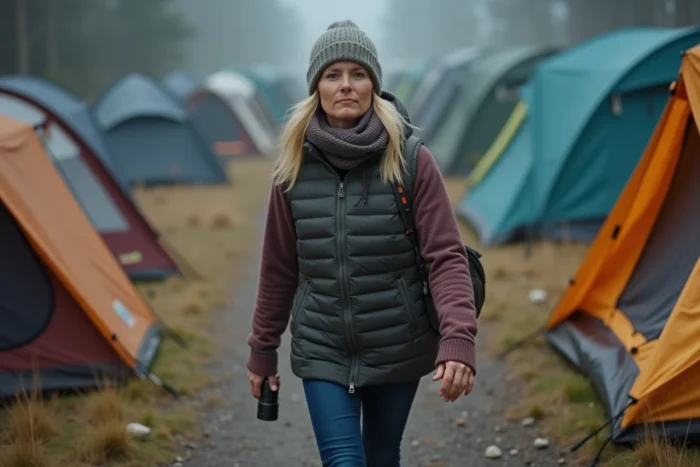
Beyond fluid management and equipment, the location of the tent directly influences sleep quality. Pitching the tent within a reasonable distance from sanitary facilities (without being right next to them, for noise reasons) shortens the nighttime journey. If camping is wild or in bivouac, choosing a spot slightly elevated avoids the humidity that cools the body and stimulates the bladder.
Thermal insulation also plays a role. A quality insulating mattress and a sleeping bag suitable for the temperature limit body cooling, a factor that accelerates bladder filling during the night. A body kept warm produces less nighttime urine than a body in mild hypothermia.
- Set up the tent at a reasonable distance from sanitary facilities, on dry, slightly elevated ground
- Use a mattress with good ground insulation (R-value suitable for the season)
- Sleep with socks and a hat in cold weather to maintain body temperature
Lastly, a often overlooked point: emptying your bladder just before getting into the sleeping bag remains the simplest and most effective action. Even without a felt urge, this habit can postpone the first nighttime awakening by one to two hours, sometimes enough to last until morning.