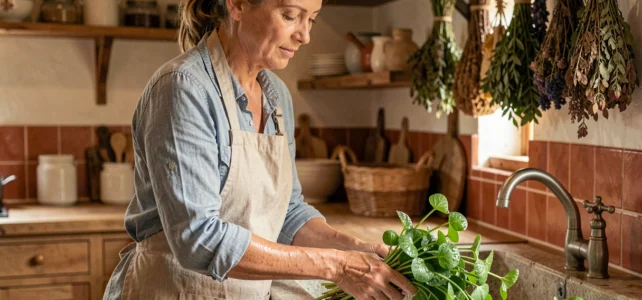
Purslane (Portulaca oleracea) loses its turgor within a few hours after harvest. Preserving its leaves and stems for winter requires mastering both the timing of the harvest and the storage technique. Here, we detail the methods that best preserve texture and nutritional profile.
Harvesting at the right stage: the factor that freezing cannot compensate for
A freezer never makes up for a late harvest. Purslane leaves should be picked when they are fleshy, firm, without yellowing or signs of flowering. As soon as the plant goes to seed, the oxalic acid content increases and the texture becomes stringy.
We recommend harvesting early in the morning, when the stems are still full of water. Cut the branches a few centimeters above the collar rather than uprooting the entire plant: purslane regrows quickly and offers multiple harvests in the same season.
Be careful after cutting: the cut stems of purslane can take root if they remain in contact with moist soil. Do not leave fragments lying around in the garden beds, or you risk the plant recolonizing unwanted areas. Gather the trimmings in a bucket, not on the surface compost.
For those who wish to delve deeper into the techniques for preserving and freezing purslane, the choice of harvest stage remains the most determining factor.
Blanching and freezing purslane: precise protocol
Blanching before freezing is non-negotiable. Without this step, enzymes continue to degrade chlorophyll and vitamins during cold storage. Raw purslane frozen directly results in a grayish and bitter mass after thawing.
Blanching steps
- Sort the leaves and tender stems. Remove any woody or tarnished parts. Wash thoroughly to remove sand and dirt.
- Dip the branches in a pot of unsalted boiling water for thirty to forty seconds, no longer. Purslane is delicate: overcooking turns it into mush.
- Immediately transfer to an ice water bath to stop the cooking. Drain thoroughly, then pat dry with a clean cloth or gently spin in a salad spinner.
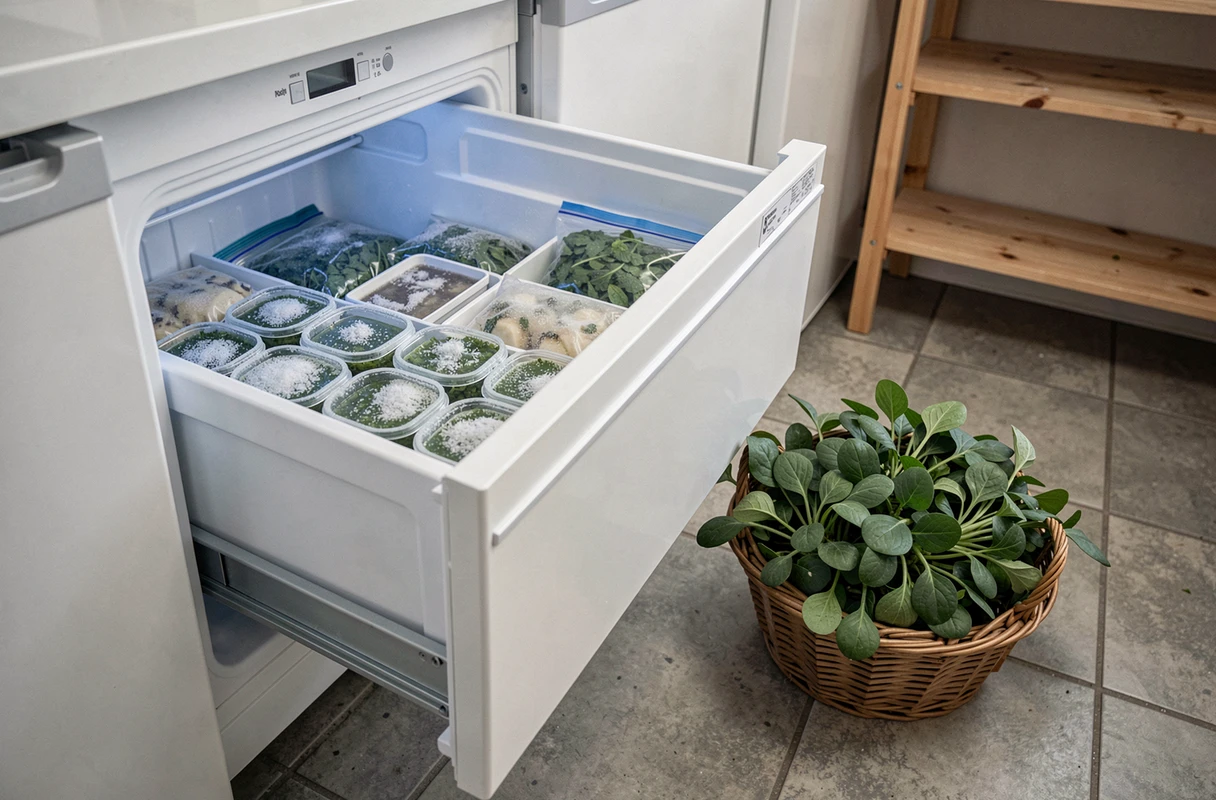
- Spread in individual portions flat on a baking sheet lined with parchment paper. Place in the freezer uncovered for one to two hours (pre-freezing), then transfer to airtight bags or containers, removing the air.
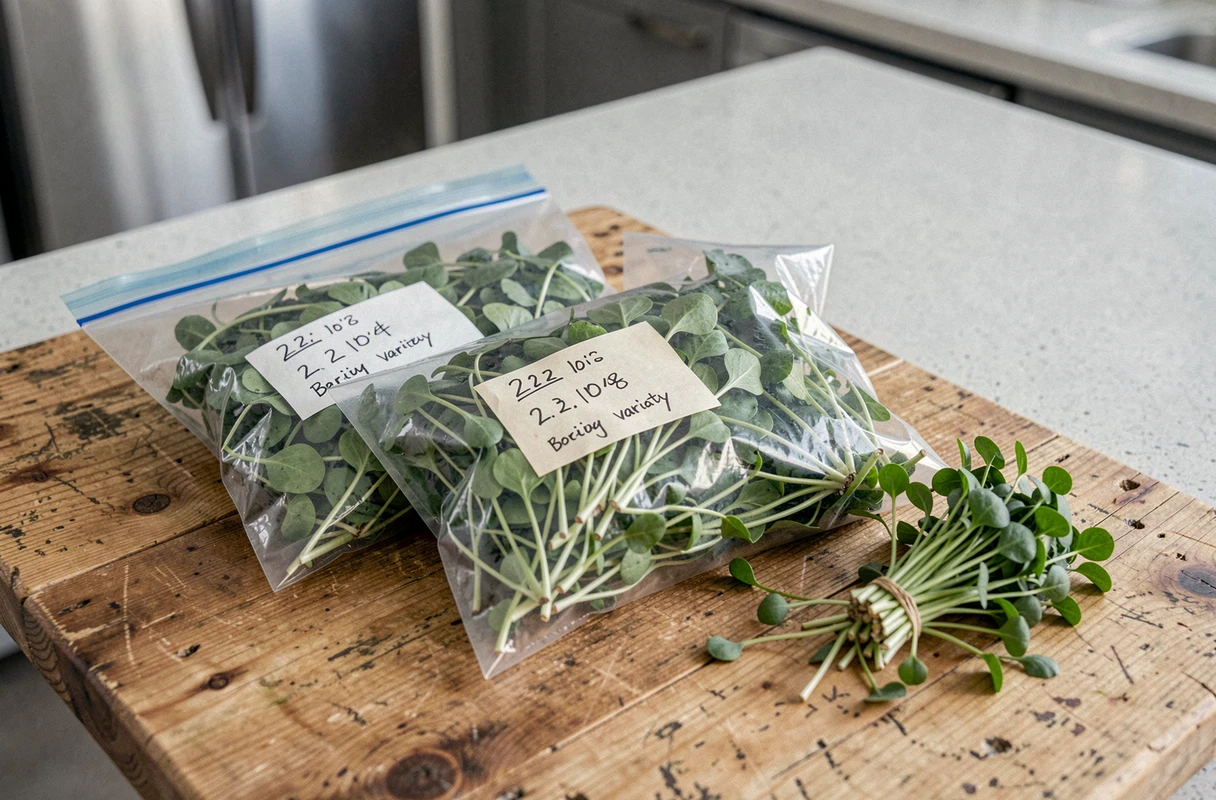
Flat pre-freezing prevents the formation of a compact block and allows you to take the desired amount without thawing everything. Label each bag with the date: blanched purslane can be stored in the freezer for several months without significant loss of quality.
Drying and powdering: an underestimated alternative
Freezing is not the only option. Purslane dries well, provided that a moderate temperature is maintained to avoid oxidizing the fatty acids.
After washing and completely draining, spread the leaves in a single layer on the trays of a dehydrator set around forty degrees. Drying takes several hours depending on the thickness of the leaves. Without a dehydrator, an open ventilated oven at the same temperature works, but watch the color: the leaves should remain dark green, not brown.
Once dry and brittle, the leaves can be ground into powder using a spice grinder. This purslane powder can be added to soups, smoothies, or seasonings throughout the winter. Store it in an opaque glass jar, away from light and moisture.
Comparison of freezing and drying
| Criterion | Freezing (after blanching) | Drying / powder |
|---|---|---|
| Texture after use | Soft, suitable for cooked dishes | No leafy texture, used as a condiment |
| Estimated shelf life | Several months in the freezer | Several months in an airtight jar |
| Equipment | Freezer, pot | Dehydrator or ventilated oven, grinder |
| Nutritional loss | Low if blanching is short | Moderate (sensitivity of omega-3 to heat) |
Canning in vinegar: lacto-fermented purslane or pickles
The crunchy stems of purslane hold up very well to vinegar. This method produces pickles ready to enhance salads and charcuterie throughout the winter, without taking up freezer space.
Select the thickest stems, those with a diameter close to that of a pencil. Wash them, cut them into even pieces, and place them in sterilized jars. Cover with a mixture of apple cider or white wine vinegar, water, salt, and herbs of your choice (mustard seeds, garlic, pepper).
Seal the jars and sterilize them in a water bath. After cooling, store in a cool, dark place. Purslane pickles gain flavor after a few weeks of maturation.
Lacto-fermentation without vinegar
For a fermented version, replace the vinegar with a brine (non-chlorinated water and salt, in sufficient proportion to inhibit undesirable bacteria). Pack the stems tightly in the jar, cover with brine, and place a weight to keep the purslane submerged. Let ferment at room temperature for a few days before placing in the refrigerator. Lacto-fermentation preserves vitamins better than sterilization, while developing probiotics.
Common mistakes that ruin purslane preservation
- Freezing without blanching: enzymatic degradation renders purslane unusable within weeks.
- Insufficient washing: purslane grows close to the ground and retains sand between the stems. A quick rinse is not enough; it needs to be soaked and then rinsed.
- Drying at too high a temperature: above fifty degrees, the leaves turn brown and lose their nutritional value.
- Storing powder in a transparent plastic bag: light quickly degrades pigments and fatty acids. Prefer opaque glass.
- Throwing stems in the compost carelessly: fragments of purslane take root and invade the garden the following season.
Purslane remains available between April and November in open ground, and sometimes year-round in a greenhouse. Planning its preservation as soon as the summer harvest allows you to enjoy it until the following spring, whether in a bag in the freezer, in powder in the pantry, or in a jar of pickles on the shelf.