
A client reports that their advertising campaign on Instagram saw its cost per click rise overnight. Upon digging deeper, it is discovered that the platform changed its bidding criteria without notice. This type of situation, where a silent update disrupts an existing strategy, illustrates why keeping up with real-time web news is not a luxury but an operational necessity for anyone working online.
Algorithmic feed or chronological feed: what changes concretely for monitoring
When we talk about following web trends, we rarely think about how platforms serve us information. Yet it is the first filter that determines what we see, and especially what we miss.
In September 2026, Australia introduced the “My Feed, My Way” initiative, which will require major social platforms (Meta, TikTok, X) to offer each user an explicit choice between a personalized algorithmic feed and a strictly chronological feed, limited to followed accounts. This project is part of a broader framework of “Digital Duty of Care,” requiring platforms to document their measures to reduce risks related to addiction and harmful content.
On the European side, the Digital Services Act (DSA) already requires very large platforms to offer at least one option for a feed not based on profiling, with a clear explanation of the parameters governing recommendations. The impact on monitoring is direct: a chronological feed shows weak signals before they go viral, while the algorithmic feed amplifies what has already broken through.
For anyone following the news from webhebdo.net or other specialized sources, occasionally switching to chronological mode on social media allows capturing signals that the algorithm would have buried. You gain in comprehensiveness what you lose in reading comfort.
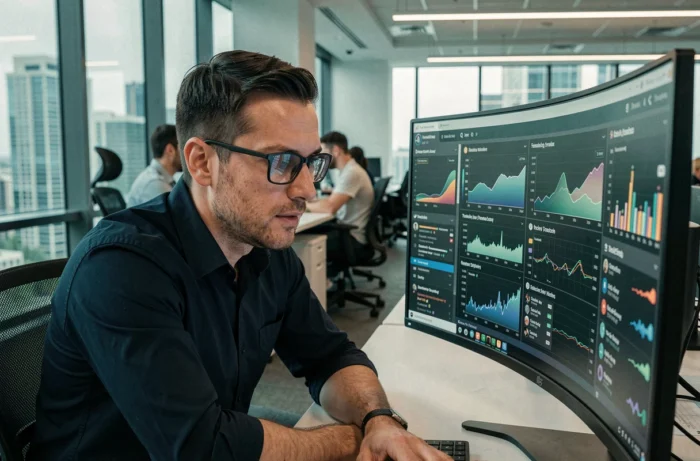
Real-time web monitoring tools: what works on the ground
The theory of monitoring is well known to everyone. In practice, we often find ourselves with dozens of open tabs, poorly calibrated alerts, and an RSS feed that hasn’t been opened in weeks. Here’s what holds up when we need concrete results.
Google Trends to detect micro-trends
Google Trends remains an underutilized tool. Most users use it to compare two keywords, while its “Current Trends” feature allows for spotting in almost real-time the topics rising in Google searches by country. You can filter by category (technology, entertainment, businesses) and obtain search data before it translates into articles from competitors.
Search data often precedes editorial content by several hours. When a term explodes on Google Trends, the articles do not yet exist. It’s the window of opportunity to publish first.
Specialized aggregators vs generalist feeds
Generalist aggregators (Google News, Apple News) compile broad sources. For effective web monitoring, feedback varies on this point, but it is noted that a specialized aggregator in digital marketing or web development delivers more relevant results than a manually filtered generalist feed.
What makes the difference:
- An aggregator that sorts by freshness rather than popularity, to avoid only seeing content that has already been massively shared on social media
- The ability to create alerts on specific phrases (platform name, algorithm update, advertising policy change) rather than vague themes
- Integration with a note-taking tool or a team messaging channel, so that information does not remain in a personal silo
User data and online experience: signals to monitor as a priority
Following web trends is not limited to editorial news. Technical and regulatory changes silently alter the user experience, and this is where real disruptions occur for businesses and brands.
Data regulation and impact on marketing
The European DSA and the Australian “My Feed, My Way” project are not isolated cases. A significant trend is observed: legislators are requiring platforms to make their algorithms more transparent. For digital marketing professionals, this means that content and social media strategies must incorporate a scenario where algorithmic distribution is reduced.
Specifically, if tomorrow a significant portion of Instagram or TikTok users switch to a chronological feed, the organic reach of posts will change radically. Brands that have built a loyal audience (active followers, not just passive ones) will be best positioned.
Cloudflare and control over AI training
In September 2026, Cloudflare launched a setting allowing the publication of a “no-training” directive in the robots.txt, while allowing search bots (Googlebot, Bingbot, Applebot) to continue crawling normally. This distinction between crawling for SEO and crawling for generative AI training is a strong signal.
Content publishers can now refuse AI training without losing their Google visibility. This is a new arbitration that did not exist just a few months ago and directly concerns any business publishing content online.

Building a web monitoring routine that lasts
The problem is never starting a monitoring routine; it’s maintaining it. After a few weeks, alerts pile up, reading stops, and we revert to word of mouth.
An approach that works on the ground is to limit sources to a handful of reliable channels and block a short slot (fifteen to twenty minutes) each morning. You scan Google Trends for your sector, consult one or two specialized aggregators, and note the three key facts in a document shared with the team.
- Monday and Thursday: check updates from platforms (Google, Meta, TikTok) that impact SEO or advertising
- Every morning: a quick scan of Google Trends on relevant categories for your business
- Friday: review the week’s notes to identify recurring trends and adjust the content strategy
The web evolves in fits and starts. A Google update, a new European data regulation, a change in a social platform’s policy: these events do not give warning. The only protection is regular and targeted monitoring, not exhaustive. It’s better to capture three actionable pieces of information per week than to drown your attention in a continuous stream that you ultimately end up ignoring.


