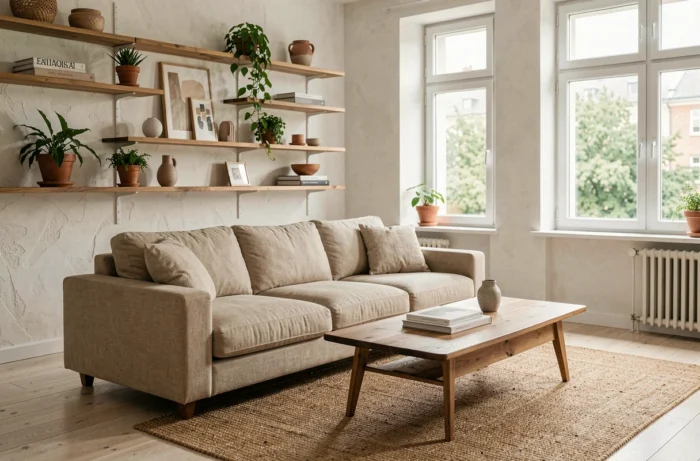
Arranging and decorating a home with style requires mastering a few technical principles before choosing a cushion or a pot of paint. The visual coherence of an interior relies on three levers: the color palette, the management of volumes, and the choice of materials. Every decision made on one of these axes influences the other two.
Colour drenching: the painting technique that restructures a room
Most decor guides recommend painting an accent wall to energize a space. Colour drenching takes this logic much further: walls, baseboards, woodwork, ceilings, and sometimes even radiators receive the same shade.
The result erases visual breaks between surfaces. In a room with irregular proportions or many nooks, this chromatic uniformity smooths out architectural flaws and gives an impression of continuous volume. Decor professionals consider this approach one of the major decor tricks that have emerged in recent years.
The choice of color determines the entire effect. A dark shade (midnight blue, forest green) envelops and brings the walls closer, which is suitable for large spaces that one wishes to make more intimate. A light shade (rosy beige, warm off-white) works better in modest-sized rooms. For those looking for concrete references for matching furniture and accessories, the c-fun.fr website in detail lists ranges compatible with this type of full-color application.
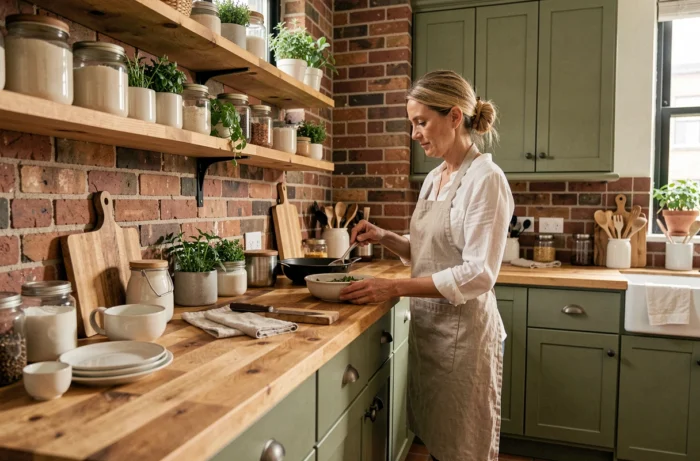
Color palette 2025-2026: from Mocha Mousse to dopamine decor
The Pantone Color Institute has designated Mocha Mousse as the reference color for 2025. This soft brown, halfway between chocolate and beige, reflects a need for visual comfort. It pairs particularly well with earthy palettes (ochre, sand, terracotta) and sunny yellows.
In contrast to this sobriety, the dopamine decor movement embraces bright colors, playful patterns, and a deliberately joyful atmosphere. Between these two poles, several trends coexist:
- The Japandi style, which merges Japanese minimalism with Scandinavian functionality, featuring neutral tones and clean lines
- Biophilic design, focused on integrating natural materials (raw wood, stone, linen) and greenery into the home
- The New Country, which revisits rural codes with robust textiles, weathered furniture, and muted tones
Choosing a stylistic current before purchasing any furniture avoids inconsistencies. A velvet emerald sofa fits into a dopamine decor interior but creates dissonance in a Japandi living room.
Modularity of furniture: arranging a space that adapts to use
A fixed piece of furniture serves a single function. Modular furniture serves two or three functions depending on the configuration. This distinction changes the way an interior is arranged, especially in homes where space constraints require compromises.
Manufacturers are now integrating modularity and home automation into their standard ranges. A sofa with detachable modules can form an extra bench, a chaise longue, or a guest bed. A coffee table with a lift-top becomes a temporary desk. These choices are not mere gadgets: they determine the flow of movement within the room.
Three criteria for evaluating modular furniture
The first criterion is the strength of the mechanism. A clipping or hinge system used several times a week must withstand thousands of cycles without play. The second concerns the folded size: a modular piece of furniture that remains bulky once transformed fails its purpose. The third relates to aesthetic coherence. A modular piece of furniture must remain elegant in each of its configurations, not just in the catalog display position.
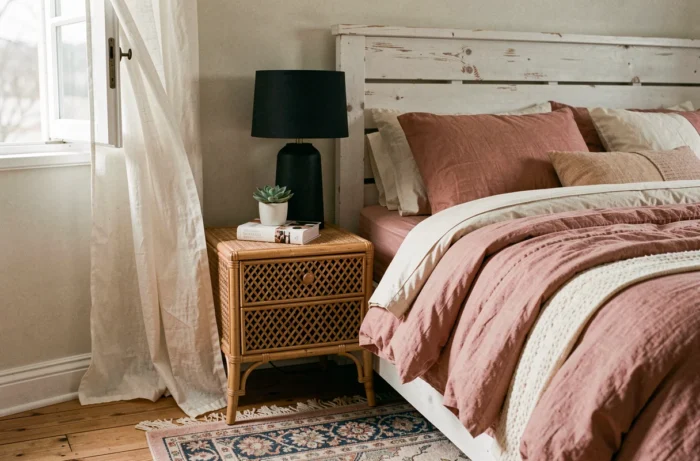
Energy renovation and decoration: two intersecting projects
Energy renovation aids (MaPrimeRénov’, energy savings certificates) have been refocused in recent years on the overall renovation of homes. This regulatory evolution has a direct consequence on interior decoration: insulating walls from the inside modifies their thickness, window frames, and sometimes the position of electrical outlets.
Planning the decoration before the end of an insulation project often leads to having to redo the same work twice. Waiting for the thermal envelope to stabilize allows for taking final measurements, choosing wall coverings suitable for the new support, and positioning lighting according to actual volumes.
Materials and finishes compatible with a renovated home
After internal insulation, walls typically receive a plasterboard or finishing coat. Some coverings (non-woven wallpaper, microporous paint) adapt better than others to these supports. Lime-based finishes, favored in the biophilic movement, require a stable and dry support, which implies sufficient drying time after the work.
The furniture market, after several years of decline, shows signs of stabilization. Consumers are increasingly directing their purchases towards durable pieces rather than frequently replacing furniture. This shift benefits solid wood furniture, reupholsterable seating, and integrated LED lighting fixtures with replaceable modules.
Decorating a home with style is not just about assembling objects that are individually pleasing. The coherence between the color palette, furniture style, and technical constraints of the building produces a result that the mere accumulation of impulse purchases cannot achieve. Trends come and go, but a well-structured interior remains pleasant well beyond a season.


