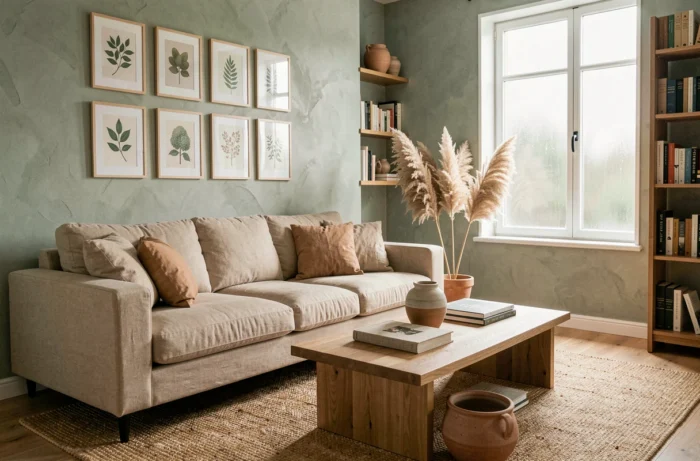
The interiors showcased on social media and in magazines sometimes give the impression of a fixed aesthetic consensus. The reality of the decoration market in 2026 tells a different story: online searches show a resurgence of interest in more expressive styles, tactile materials, and spaces designed to be lived in rather than photographed. This evolution deserves to be examined piece by piece, material by material, to distinguish underlying movements from fleeting trends.
Chrome Finishes and Art Deco: A Measurable Aesthetic Shift
The Art Deco style, long confined to luxury hotels and heritage references, is making a comeback in domestic interiors. According to NewsNation Online (September 2026), searches related to Art Deco and chrome have significantly increased on Google Trends this year. This is not just a nostalgic return: chrome metal finishes are gradually replacing the brushed brass that has dominated for several years.
This shift first affects the details. Door handles, kitchen faucets, accent lighting: chrome brings a cool shine that contrasts with the earthy palettes still very much present. The geometric lines characteristic of Art Deco are also found in furniture design, featuring bold curves and polished metal bases.
For those looking to integrate this direction without turning their living room into a 1920s film set, the principle remains one of moderation. A fluted frame mirror, a smoked glass vase, or a geometric ceiling light is enough to signal the intention. The inspirations available on the Belle Déco website for the home allow for visualizing this type of combination between contemporary pieces and retro accents.
Natural Materials and Dark Wood: What Home Decoration Borrows from Eco-design
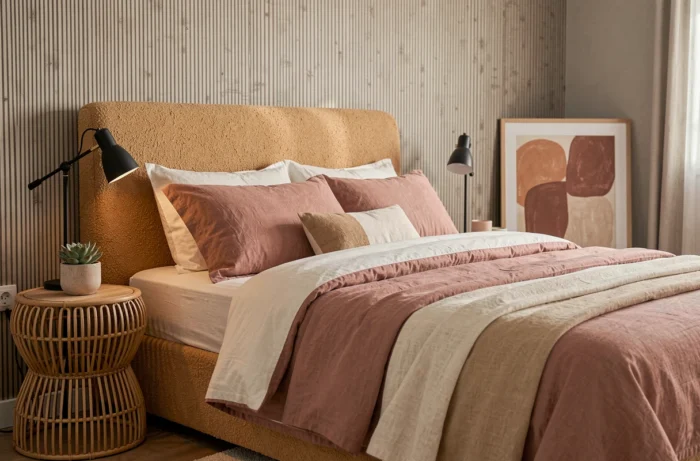
The trend towards natural materials is not new, but it is changing its tune. Light Scandinavian wood is giving way to dark wood, matte finishes, and earthy tones. Walnut, dark-stained oak, and textured veneers are making their way into kitchens, flooring, and living room furniture.
This shift is accompanied by a growing interest in the provenance and sustainability of materials. The European regulatory framework is evolving in this direction: the Working Plan 2025-2030 of the ESPR (Ecodesign for Sustainable Products Regulation) is preparing new requirements for several product families, including furniture. The anticipated arrival of a digital product passport for furniture could change consumers’ purchasing criteria in the coming years.
Field feedback on this point varies: some manufacturers are already anticipating these standards, while others believe that the real impact on mainstream decoration remains uncertain in the short term. What is emerging, however, is a clear preference for furniture perceived as durable, repairable, and whose texture improves over time.
Floor and Wall: Textured Wallpaper Gains Ground
Wallpaper is experiencing a revival, driven by botanical patterns, material effects (linen, stone, plaster), and muted colors. It is no longer about covering four walls with the same pattern, but rather using wallpaper as an accent on a single wall, often behind a low piece of furniture or a headboard.
For flooring, ceramic tiles mimicking natural stone remain in high demand, particularly in kitchens and wet areas. They offer the durability of technical tiling with a warmer visual appeal than traditional tiles.
Hybrid Rooms and Disconnected Spaces: Interior Decoration Serving Functionality
The relationship with the living room, office, and kitchen is evolving. Several reports published in the summer of 2026, including the Trend Report from Atlantic Candles (August 2026) and that from Sherwin-Williams (September 2026), confirm a trend: domestic spaces are becoming more flexible and less staged. The multifunctional room is no longer a compromise but a conscious choice.
In practical terms, this translates into modular layouts. A reading nook in the living room replaces the closed office. A bench in the kitchen serves both as storage and informal dining space. Mobile partitions or thick curtains act as temporary separations.
Living Room Decor Designed for Relaxation
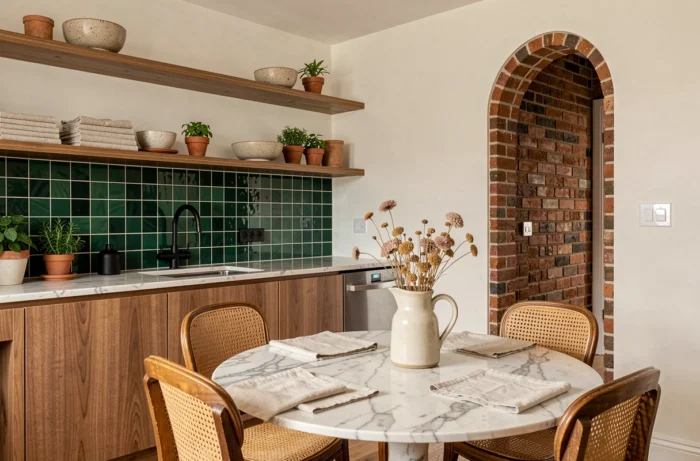
A less discussed aspect of this trend concerns spaces designed for disconnection. Some layouts intentionally incorporate the absence of visible outlets, non-connected dim lighting, or screen-free corners. The idea is not to reject technology but to create zones where paint, textiles, and natural light are enough to define the ambiance.
Colors play a central role in this approach. Warm shades, close to terracotta, rosy beige, or olive green, dominate the palettes proposed for autumn 2026. They contribute to the search for an interior that soothes rather than impresses.
Customization and Tailored Details: What Distinguishes Sustainable Decoration from a Trend
According to Family Handyman (September 2026), decoration in 2026 favors tailored details and personalized atmospheres. Added moldings on flat doors, recessed wall niches to display objects, asymmetrical custom shelves: these interventions, often achievable without major renovation work, transform a standard space into a unique interior.
This approach is distinguished from past trends by its relationship to time. Rather than following a color palette or an identified style (Scandinavian, industrial, Japandi), it is about assembling elements that reflect a personal journey:
- Found or inherited objects integrated into a contemporary decor, without seeking stylistic uniformity
- Raw materials left exposed (polished concrete, brick, lime plaster) as a neutral base that the furniture dresses up
- Design or handcrafted pieces chosen for their texture or story rather than for their conformity to an identified trend
The available data does not yet allow for measuring whether this shift towards personalization will withstand the usual cycles of decor trends. What seems certain is that neutral minimalism is receding in favor of warmer, more tactile interiors. Chrome coexists with dark wood, textured wallpaper dialogues with raw concrete, and the living space is primarily conceived as a place of comfort before being a display to show off.


