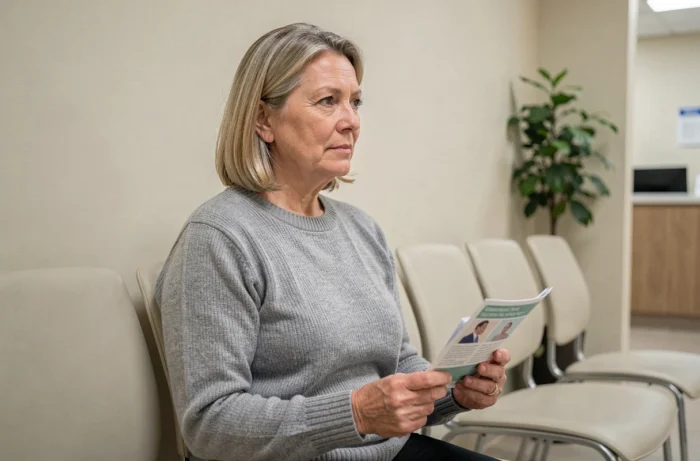
A knee that swells after three days of walking, fatigue that doesn’t go away despite full nights of sleep, shortness of breath on the second floor when climbing was easy six months ago. It is often these concrete signals, rooted in daily life, that prompt a consultation. Understanding the various diseases, their symptoms, and their causes is first about knowing how to read what the body expresses day by day.
Chronic diseases in France: projections that change the game
There is a lot of talk about prevention, but recent figures from the Health Insurance provide a more tangible dimension to the problem. According to its report Charges and products published in July 2026, the proportion of the French population affected by chronic disease could rise from 38% to over 44% by 2035. The budgetary impact follows: about 10 billion euros more per year between 2024 and 2030.
These are not abstractions. For patients, this translates into longer waiting times at specialists, increasing out-of-pocket expenses, and growing pressure on the local healthcare system. The doubling of the medical deductibles ceiling, announced for October 2026, directly affects people with long-term illnesses (ALD).
When looking to learn more about auxportesdelasante.fr, one quickly realizes the diversity of the conditions involved, from diabetes to fibromyalgia, each with its specific constraints.
Deceptive symptoms: when the body sends ambiguous signals
A diffuse pain in the shoulders may suggest a simple neck strain. But if it persists for several weeks and is accompanied by sleep disturbances, concentration difficulties, and increased sensitivity to touch, we enter the realm of fibromyalgia, a condition still underdiagnosed.

The problem is that many diseases share identical symptoms. Chronic fatigue appears in both hypothyroidism and chronic fatigue syndrome (recently better recognized by Health Insurance), depression, or anemia. Shortness of breath can signal asthma, heart failure, or simply decompensation related to lack of physical activity.
In practice, it is recommended to note three elements before a consultation:
- The precise chronology of symptoms (since when, at what time of day, after what effort).
- The aggravating or relieving factors (diet, sleep, physical activity, stress).
- Family history, even distant ones, as genetic risk weighs heavily on conditions like type 2 diabetes or cardiovascular-neurological diseases.
A symptom diary kept over two weeks helps the doctor much more than a vague description during the consultation.
Cardiovascular diseases: a national strategy still unknown
Cardiovascular-neurological diseases remain the leading cause of mortality among women and the second among all populations combined. We know the classic risk factors: hypertension, smoking, sedentary lifestyle, excess salt. What is less known is that France has implemented a specific multi-year national strategy to combat these diseases.
This strategy targets several concrete areas: early detection of high blood pressure (many patients are unaware that they are hypertensive), improving post-stroke care pathways, and promoting adapted physical activity (APA). APA is not a gimmick: prescribed by a doctor, it allows for a gradual reconditioning supervised by a trained professional.
For a patient recovering from a cardiac event, resuming adapted physical activity significantly reduces the risk of recurrence. Feedback varies on the appropriate pace, but current recommendations converge towards at least 150 minutes of moderate activity per week.
Living better with a disease: the levers that work daily
Medication only covers part of the management. For chronic diseases, quality of life also depends on what is done between two consultations.

Sleep is an underestimated lever. A diabetic patient who sleeps less than six hours a night sees their blood sugar levels become unregulated, regardless of their diet. A patient suffering from fibromyalgia who improves the quality of their sleep (not necessarily the duration) often notices a decrease in pain intensity.
Diet plays a direct role, not just in prevention. For hypertension, reducing salt intake and increasing potassium intake produces a measurable effect within a few weeks. For chronic inflammatory diseases, certain elimination diets (gluten, lactose) show results in some patients, but not all. This is an area where support from a dietitian helps avoid deficiencies.
Home care is becoming an increasing challenge. With the rise of chronic diseases in the population, more and more patients manage their treatment at home: self-measurement of blood pressure, insulin injections, respiratory rehabilitation. Digital health (tracking apps, teleconsultation) facilitates this monitoring, provided the patient is supported in using the tools.
- Keep a tracking notebook (paper or digital) to note blood pressure, blood sugar, pain, or sleep quality.
- Plan regular follow-up consultations, even in the absence of acute symptoms.
- Request a prescription for APA as soon as the disease impacts mobility or physical condition.
- Do not neglect mental health: anxiety and depression frequently accompany chronic conditions and worsen physical symptoms.
Understanding diseases also means accepting that they require constant adjustment. The treatment that works at 40 is not the same as at 60. The needs for physical activity, sleep, and psychological support evolve with the condition. The only constant is the regularity of follow-up and the ability to adapt one’s routine when the body changes its signals.


