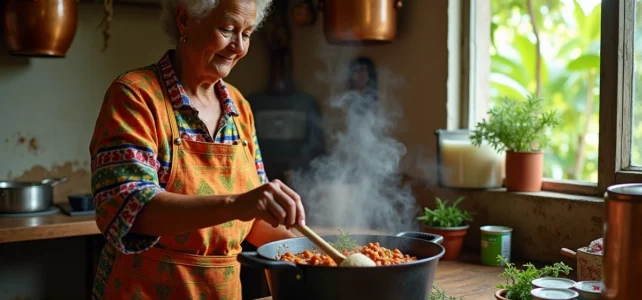
A colombo simmering gently, a fresh sauce chien prepared on the spot, rice stuck to the bottom of the pot: Creole cuisine is first recognized by its aromas. Before being a collection of recipes, it is a repertoire of gestures passed down in the family kitchens of the Caribbean, Reunion, or Louisiana. Understanding these Creole flavors means tracing back a history where each spice tells a story of mixing.
The Creole pantry: spices that tell a story of mixing
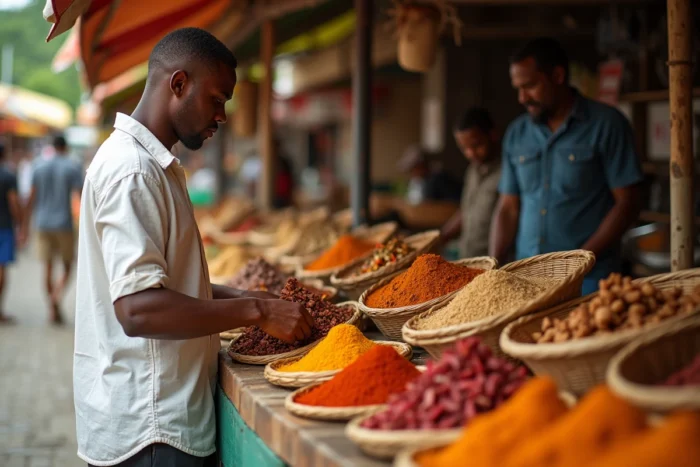
Have you ever noticed that Creole dishes rarely have a “simple” taste? That’s because each preparation layers several aromatic levels. Turmeric (called “safran péyi” in the Caribbean) colors and scents. Bois d’Inde adds a peppery note similar to allspice. The vegetarian pepper gives fragrance without burning the mouth.
This palette of spices was not born by chance. It reflects the exchanges between the Indigenous, African, Indian, and European populations that cohabited in the islands. The colombo, a blend of spices of Tamil origin, became a staple of Caribbean cuisine after the arrival of Indian workers in the 19th century. Coconut, omnipresent in stews and desserts, comes from African and Asian traditions.
What distinguishes an authentic Creole pantry is the simultaneous presence of fresh local products (thyme, chives, flat-leaf parsley) and these spices from several continents. A successful Creole dish never smells like just one thing: it offers a complex harmony, built layer by layer.
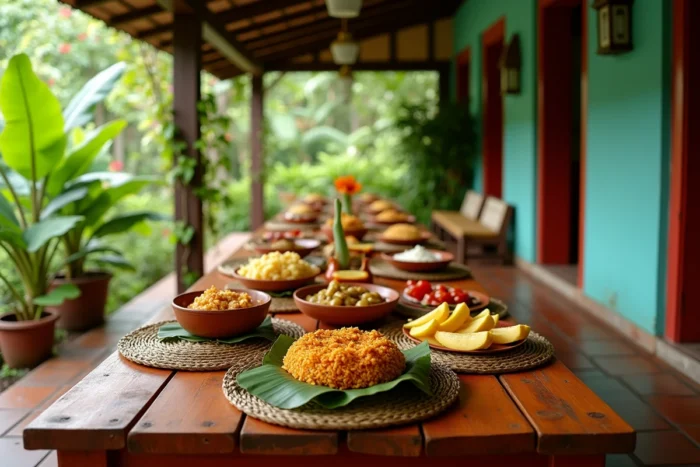
To explore this culinary richness and discover preparations faithful to tradition, a useful resource is: https://www.chezagathe.com/, which highlights recipes and Creole products passed down from generation to generation.
Reunion curry and Caribbean colombo: two techniques, one logic
Creole cuisine is not a uniform block. From one island to another, methods change, even if the philosophy remains close. Comparing Reunion curry and Caribbean colombo helps to understand this diversity.
The curry is based on a rougail and a side of grains (lentils, red beans). The meat or fish simmers in a tomato sauce spiced with turmeric, garlic, and ginger. Rice remains the central element, served in generous quantities.
The Caribbean colombo uses a specific spice blend (turmeric, mustard seeds, coriander, cumin, black pepper) and often incorporates local vegetables: giraumon, christophine, yam. Marinating in lime beforehand is a key step that tenderizes the meat and locks in the aromas.
In both cases, the logic is the same: a long cooking time, over low heat, allowing the flavors to meld. A Creole dish is not prepared in twenty minutes. It requires patience, and it is this slowness that produces the depth of flavor sought.
The role of sauce in a Creole meal
Whether it’s sauce chien (made with chives, garlic, pepper, and lime), rougail tomato in Reunion, or Louisiana Creole sauce, the sauce does not accompany the dish, it completes it. It brings acidity, spiciness, or freshness that balances the richness of the main dish.
For example, sauce chien is always prepared at the last moment. Its ingredients are finely chopped, not cooked, and the boiling water poured over them releases the oils from the herbs. It’s a simple technique, but the result depends on the quality of the fresh products used.
Learning Creole cuisine: workshops and family transmission
Online competitors mainly offer recipes to reproduce at home. What they address less is the immersive learning dimension that is developing in Creole territories.
In Reunion, experiences with locals allow sharing a traditional breakfast based on leftover rice, presented as a family ritual. In New Orleans, the New Orleans School of Cooking offers classes focused on gumbo, jambalaya, and pralines. These structured formats convey what a cookbook cannot show: the hand movements, eye measurement, real-time adjustments.
Oral transmission remains the main mode of learning Creole cuisine. Many recipes were never written down before being published on blogs or in recent books. Participating in a workshop on-site gives access to this uncodified knowledge.
- Immersive workshops with locals help understand daily gestures: how to measure the pepper, when to add coconut milk, when to lower the heat.
- Cooking school classes (like in New Orleans) structure recipes and explain the origins of each dish, which helps to reproduce the flavors at home.
- Local markets (covered market of Saint-Denis, market of Pointe-à-Pitre) are places where vendors willingly share their preparation tips if you ask.
Creole cuisine and sustainable eating: a contemporary reinterpretation
An aspect little addressed in search results concerns the “sustainable” reinterpretation of Creole cuisine that has emerged in recent years. Cajun cuisine, a direct cousin of Louisiana Creole cuisine, is experiencing a resurgence of interest precisely because it uses seasonal ingredients and values short supply chains.
In the Caribbean and Reunion, this logic has always existed without being named as such. Cooking with fruits and vegetables available from the garden or market, using fish caught in the morning, repurposing leftovers from the previous meal: these Creole practices naturally align with what contemporary food discourses call “responsible cooking.”
The Creole does not waste, it transforms. A leftover of rice becomes a gratin, a fish broth serves as a base for a sauce, vegetable peels feed animals. This domestic economy, passed down by previous generations, gives Creole cuisine a new relevance in a context where food sustainability is becoming a central issue.
Creole cuisine does not need to be modernized to meet current expectations. Its basic principles (fresh products, seasonality, slow cooking, zero waste) already fulfill them. What it perhaps lacked was simply the recognition of this coherence, beyond the gustatory pleasure it has provided for centuries.