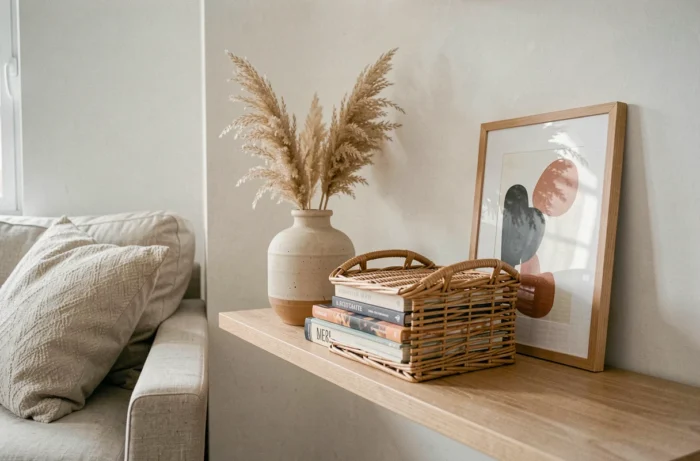
Choosing decorative accessories for your interior often involves balancing immediate visual impact with the actual lifespan of the item. In 2026, this tension intensifies: the European regulation on the ecodesign of products imposes new requirements on furniture and accessory manufacturers, while aesthetic trends continue to evolve each season. Understanding what distinguishes a durable decorative accessory from a fleeting purchase allows for more solid choices.
Ecodesign and decorative accessories: what changes with the regulation after 2026
The furniture sector in France and Europe is already subject to obligations for take-back, collection, and ecological contributions based on the proportion of recycled material. The ongoing tightening of regulations emphasizes reuse and repair. For decorative accessories, this means that items designed to be repairable retain their value longer.
The European regulation on the ecodesign of sustainable products (ESPR) provides for the gradual implementation of a digital product passport. This system aims to make traceable the composition, origin of materials, and recycling conditions of an item. A ceramic vase, a designer mirror, or a table lamp will eventually be included.
In practical terms, when comparing two decorative items of similar style, the presence of a repair or take-back system distinguishes a lasting purchase from a disposable one. Among the accessories offered on Kabanes, this logic of sustainability is reflected in the choice of materials and the design of the pieces.
Trendy decorative accessories: comparison of materials based on their durability and style
The material of an accessory determines both its visual appearance and its longevity. Not all decorative items age the same way, and upcoming regulations will make the gap between recyclable materials and hard-to-recycle composite materials more visible.
| Material | Aesthetic Appearance | Repairability | Recyclability in furniture sector |
|---|---|---|---|
| Handmade ceramic | Textured, unique | Low (irreversible breakage) | Medium (inert, little valued) |
| Metal (brass, steel) | Modern or industrial | High (welding, polishing) | High (metal sector) |
| Solid wood | Warm, organic | High (sanding, varnishing) | High (wood sector) |
| Blown glass | Bright, refined | Low | High (glass sector) |
| Composite plastic | Variable, often smooth | Very low | Low (mix of resins) |
Metal and solid wood combine good repair potential with high recyclability. In contrast, accessories made of composite plastic, even if visually appealing, pose a problem at the end of their life: their resin mix makes them difficult to recycle in existing sectors.
Solid wood and metal offer the best compromise between style and future compliance. This observation does not disqualify ceramic or glass, but it encourages pieces that are kept for a long time out of attachment.
Mirror, light fixture, sculptural object: three categories of accessories to consider for a living room
Competitors often list ten categories of decorative items without prioritizing them. However, three types of accessories concentrate most of the visual impact in a living room or living space.
The designer mirror as a space amplifier
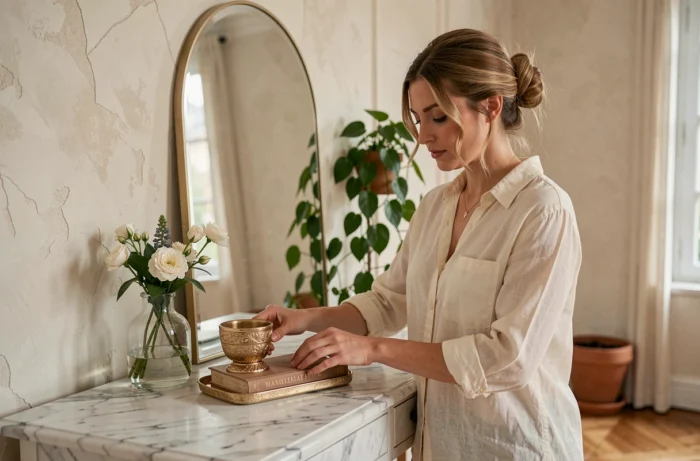
A large-format mirror alters the perception of a room more radically than a painting or a poster. Its shape (rounded, asymmetrical, framed in raw metal) determines the style of the room. A well-placed mirror replaces several small decorative items by creating a focal point on its own.
From a regulatory standpoint, a mirror with a metal or solid wood frame is easily repairable (reframing, repolishing) and remains valuable at the end of its life.
The accent light fixture as a trend marker
Portable and rechargeable light fixtures have taken a considerable place in interior decoration in recent seasons. Their advantage: they can be moved from one room to another and allow for testing a new arrangement without drilling a wall.
Their limitation: models with non-replaceable built-in batteries become obsolete as soon as the battery weakens. Choosing a light fixture with a replaceable battery extends its lifespan by several years.
The sculptural object or statement vase
A large-format vase or a decorative sculpture anchors the style of a room. Handmade ceramic remains the material of choice for this type of object, despite its fragility. The choice here is often made more by heart than by durability calculation, and that’s normal: these pieces are the ones we keep the longest.
Choosing decorative accessories that remain desirable after several seasons
The question is not about resisting trends, but about distinguishing what belongs to a deep aesthetic movement (raw materials, organic shapes, earthy tones) and what is merely a passing fashion effect. A few criteria help to sort through:
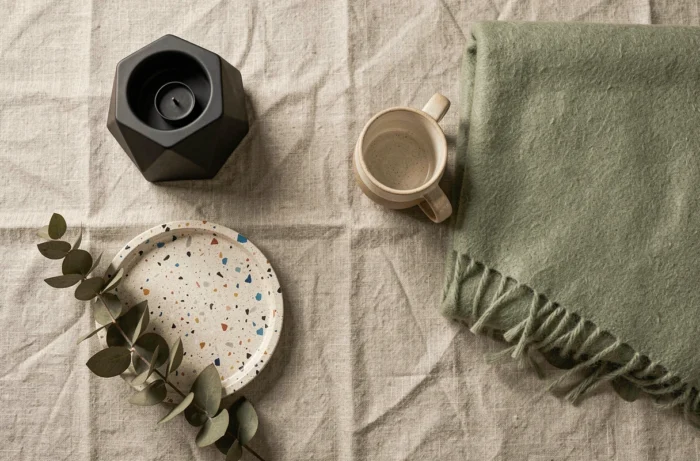
- Is the color a neutral or natural tone (terracotta, off-white, sage green) or a color strongly marked by a specific season? Neutral tones age better over the years.
- Does the shape of the object fit into a broad stylistic family (minimalist, organic, art deco) or into a very dated micro-trend? A simple shape ages better than an ultra-specific pattern.
- Can the object change rooms or functions? A decorative tray that also serves as a catch-all, a vase that works with or without flowers: versatility of use is a marker of decorative longevity.
The most resistant accessories to trends share a common point: they do not depend on a unique context to exist visually. An asymmetrical brass mirror works in a minimalist living room as well as in a bohemian interior. A black metal light fixture blends into a Scandinavian room as much as into an industrial decor.
The regulation on ecodesign pushes manufacturers to create more durable accessories, which, indirectly, promotes timeless designs. An object designed to last physically tends to also be designed to last aesthetically. Technical durability and stylistic durability now converge, and this is probably the most structuring change for the interior decoration market in the coming years.


