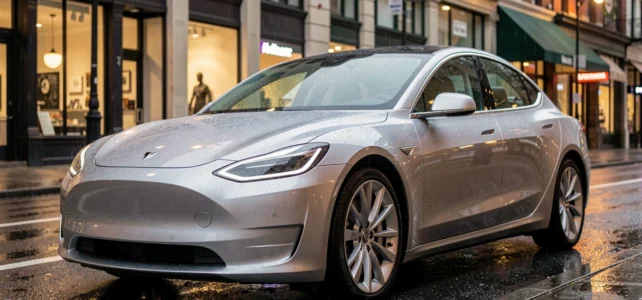
The automotive market is undergoing a rapid restructuring. With the rise of hybrid powertrains, the tightening of European CO₂ standards, and the massive influx of Chinese manufacturers into France, the benchmarks that guided car purchases three years ago are no longer the same. Here are the key areas that are truly shaping the automotive landscape in 2024-2026.
Hybrids Leading Sales: The Powertrain That the Market Has Really Chosen
There is a lot of talk about 100% electric cars. Their growth is real. But the powertrain that currently dominates registrations in Europe is not pure electric: it is non-rechargeable hybrids.
By 2026, simple hybrids will account for about a third of European registrations, ahead of all other technologies. Battery electric vehicles, on the other hand, will exceed one-fifth of the market in the European Union.
Why this gap? The simple hybrid engine does not require any charging stations. Its additional cost at purchase remains moderate compared to a conventional thermal engine. And it allows manufacturers to lower their average CO₂ emissions without fully transitioning to electric.
What we observe is a multi-technology market where simple hybrids, plug-in hybrids, and 100% electric vehicles coexist. The transition does not follow a straight line towards full electrification. It goes through intermediate stages, and hybrids are the main pillar today. To follow these developments over the months, Point Contre Point’s auto content provides regularly updated analyses on these topics.

European CO₂ Standards 2025-2035: What Manufacturers Must Comply With
The European regulatory framework sets a clear course: 0 g CO₂/km for new cars starting in 2035. This means that only vehicles with zero emissions at the tailpipe will be allowed to be sold new after this date, for both passenger cars and light commercial vehicles.
Have you noticed that some manufacturers are increasingly offering electric or plug-in hybrid models, even in segments where they had never had any? This is not just a trend. It is a direct regulatory constraint.
CO₂ Pooling: A Solidarity Mechanism Between Brands
A little-known new feature in mainstream media: manufacturers can now meet their CO₂ targets for 2025-2027 based on a smoothed average over three years. A manufacturer that exceeds its targets in one year can compensate in the following year, as long as the three-year average remains compliant.
Another lever: pooling, or fleet mutualization. A manufacturer with average emissions that are too high can partner with another whose range is more virtuous. Their registrations are then counted together for the calculation of penalties.
This system benefits brands that sell a lot of electric vehicles. They monetize their good CO₂ results by selling “credits” to manufacturers that are lagging behind in electrification.
Chinese Manufacturers in France: Five New Brands in Six Months
The first half of 2026 saw an unprecedented acceleration. Five new Chinese brands entered the French market within six months, with a network rollout already underway.
These manufacturers are arriving with electric models positioned in very competitive segments: compact SUVs, family sedans, city cars. Their prices are often significantly lower than those of European brands for comparable equipment levels.
What Changes for the Buyer
The arrival of these brands alters the purchasing equation on several fronts:
- The prices of entry-level and mid-range electric vehicles are under downward pressure, including from European manufacturers who are adjusting their prices to remain competitive.
- The after-sales network remains a point of concern: these new brands still have few service points outside major urban areas.
- The warranties offered are often long (sometimes more generous than those of historic brands), but the availability of spare parts in the long term remains to be seen.
The question is no longer whether Chinese manufacturers will establish themselves permanently in Europe. It is already happening. The real unknown is their ability to retain customers beyond the first purchase.
Charging Stations and New Professions: Infrastructure Catching Up
Summer 2026 saw the emergence of a profession that no one was talking about two years ago: the “charging station attendant.” In the busiest charging stations, especially during major holiday weekends, agents are deployed to streamline the charging operations.
Their role is twofold. They assist drivers who are unfamiliar with fast chargers (choosing the cable, starting the session, payment). And they manage queues to avoid conflicts when demand exceeds capacity.
This seemingly minor detail reveals a fundamental change. The charging infrastructure is no longer limited to installing charging stations. It now incorporates a human service dimension, comparable to what traditional gas stations offered with attendants.
Points to Check Before a Long Electric Trip
- Identify fast charging stations along the route, prioritizing those with multiple simultaneous chargers to reduce waiting time.
- Check the compatibility of your vehicle with the different charging networks (some subscription cards do not work with all operators).
- Allow for a margin on the displayed range: actual consumption increases significantly with air conditioning, loading, and highway speed.
The automotive market of 2024-2026 is not just a race towards electric. It is a complete restructuring, where hybrids dominate sales, where CO₂ regulations push manufacturers to pool their efforts, and where new Chinese players are reshuffling the pricing cards. The buyer has more choices than ever, but also more parameters to evaluate before signing an order form.