
The sneaker market is no longer what it was five years ago. Collections multiply each season, color palettes change from quarter to quarter, and the question of sustainability has become part of the selection criteria. Choosing the right trendy sneakers today involves balancing style, comfort, materials, and brand transparency.
Earth tones and metallic finishes: the colors that structure trendy sneakers in 2026
The trend forecasting agencies WGSN and Pantone have validated two rising palettes for lifestyle sneakers this year. On one side, earth tones (sand, terracotta, khaki, tobacco brown) dominate everyday collections. On the other, metallic finishes, silver or gold, are gaining ground on bolder models.
This dual movement reflects two opposing ways to wear sneakers. Earth tones blend into a neutral wardrobe and work well with raw denim, linen pants, or chinos. Metallics, on the other hand, serve as a statement piece in a sober outfit, much like a visible piece of jewelry at the feet.
To find models that follow these color trends without sacrificing quality, specialized platforms like sneaky.fr allow you to compare available references and spot pairs that match a specific style.
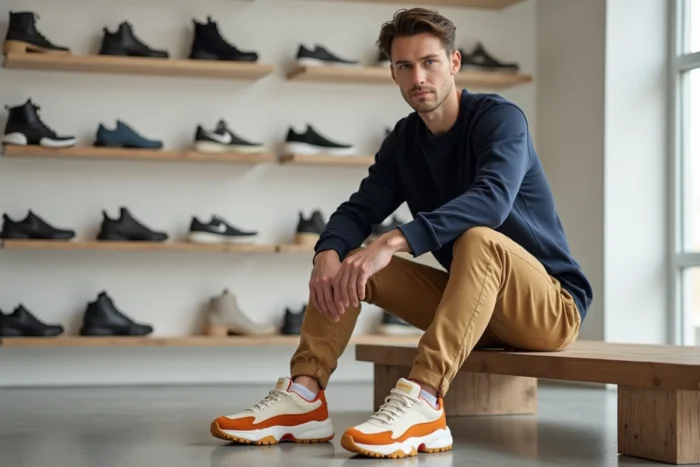
A common pitfall is buying a pair of overly flashy metallic sneakers, worn three times and then abandoned at the back of the closet. If the metallic style attracts you, opt for a model where only certain details (logo, heel counter, eyelets) use this finish. Versatility remains the best indicator of a successful purchase.
French sneakers and traceability: what the REP system changes for consumers
The extended producer responsibility (REP) system applied to footwear now requires certain brands to organize the take-back, recycling, and valorization of their end-of-life pairs. This regulatory framework helps distinguish between brands that communicate verifiable commitments and those that rely solely on marketing rhetoric.
Some French sneaker brands voluntarily publish traceability information and extra-financial data, even when they are not subject to detailed reporting obligations. This is a positive signal, but feedback from the field varies regarding the actual ease of returning a used pair in-store.
What the REP does not yet guarantee
REP compliance says nothing about manufacturing conditions or the carbon footprint of a pair. A recyclability logo does not replace a complete traceability sheet. Before purchasing, check if the brand details the origin of materials, the assembly location, and the sole composition.
- Look for whether the brand publishes a sustainability report or accessible traceability data on its site, not just a generic badge.
- Check for the existence of a concrete take-back program with identifiable collection points, not just a legal mention.
- Prefer brands that specify the manufacturing location on the product sheet, not just “designed in France.”
Choosing sneakers according to your style: materials and silhouettes to compare
The choice of a pair of sneakers primarily depends on the silhouette. Models with thick soles remain present in collections, but the trend is shifting towards slimmer profiles that are closer to the ground, especially among brands that focus on a retro look.
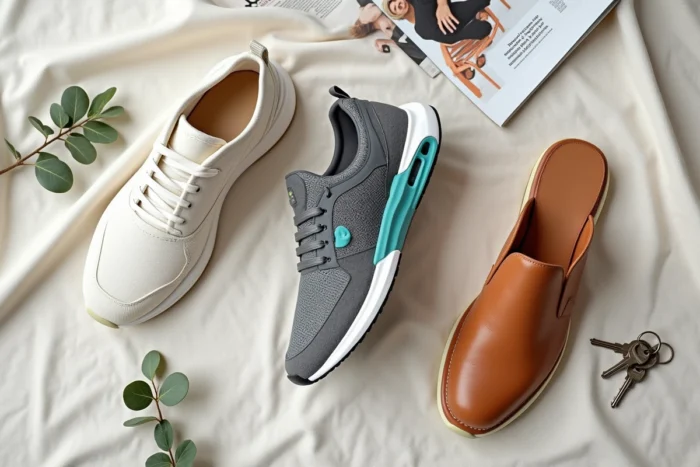
Full-grain leather ages better than synthetic mesh, but is heavier and breathes less in summer. Recycled or vegan materials are improving in quality, although their long-term durability remains variable depending on the processes used. The available data does not allow for a conclusion that a vegan sneaker lasts as long as a classic leather model in all use cases.
Adapting sneakers to the rest of the outfit
A pair of minimalist white sneakers works with most outfits, from casual suits to jeans. Colorful or patterned models require a more neutral wardrobe to avoid visual overload.
- With wide pants or straight jeans, a low-profile sneaker elongates the silhouette and balances proportions.
- With slim pants or fitted chinos, a thick-soled model creates a pronounced volume contrast.
- With a dress or midi skirt, earth tones (sand, terracotta) integrate more easily than a flashy color.
- For a streetwear look, collaborations between brands and designers remain safe bets, provided you check the quality of materials beyond the name on the label.
Sneaker brands: Nike, Adidas, and alternatives to watch
Nike and Adidas continue to dominate the sneaker market through their production volume and visibility. Iconic models (Air Force 1, Gazelle) remain safe bets. However, their omnipresence poses a problem for those looking to stand out.
Several French brands are moving upmarket in the lifestyle segment. Some offer sneakers made in Europe with traceable materials, at prices comparable to the premium models of major brands. The price gap between a traceable French sneaker and a mid-range Nike model is significantly narrowing.
A useful reflex before a purchase: compare not just the face value price, but the cost per wear. A higher-priced pair worn twice as long is cheaper than a cheap model replaced every season. The longevity of materials remains the most reliable criterion for assessing value for money.
The market for trendy sneakers is increasingly segmented between disposable models and pairs designed to last. Comparison tools, traceability sheets, and the REP system now offer concrete benchmarks, even if their coverage remains partial. Choosing a pair that matches your style requires balancing aesthetics with manufacturer transparency, not just following the latest media-covered collaboration.