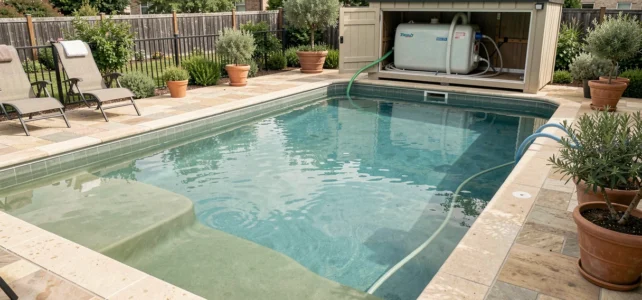
A saltwater pool produces its own chlorine through electrolysis, which simplifies daily disinfection. This apparent autonomy masks specific points of vigilance: a chemical imbalance, a clogged filter, or the presence of dissolved metals can cause the water to turn green in just a few days. The five techniques detailed here target the most common causes of green water in a saltwater pool, with an emphasis on prevention rather than remedy.
1. Stabilize the TA before correcting the pH

Most guides recommend maintaining the pH between 7.0 and 7.4. This is a necessary condition, but insufficient if the total alkalinity (TA) is not controlled beforehand. An unstable TA makes it impossible to stabilize the pH, even with regular additions of corrective products.
The TA acts as a chemical buffer. When it is too low, the pH fluctuates wildly with the slightest addition of water or product. When it is too high, the pH remains stuck in the alkaline zone, which significantly reduces the effectiveness of the chlorine produced by the electrolysis cell. Algae then take advantage of this window to thrive.
The method involves testing the TA before each pH correction. If the TA is below the recommended range, adding sodium bicarbonate gradually raises it. If it is too high, a diluted acid brings it down. Only once the TA is stabilized does the adjustment of the pH become truly sustainable. Seeking to avoid green water in a saltwater pool starts with this often overlooked step.
2. Adjust the filtration time to the actual water temperature
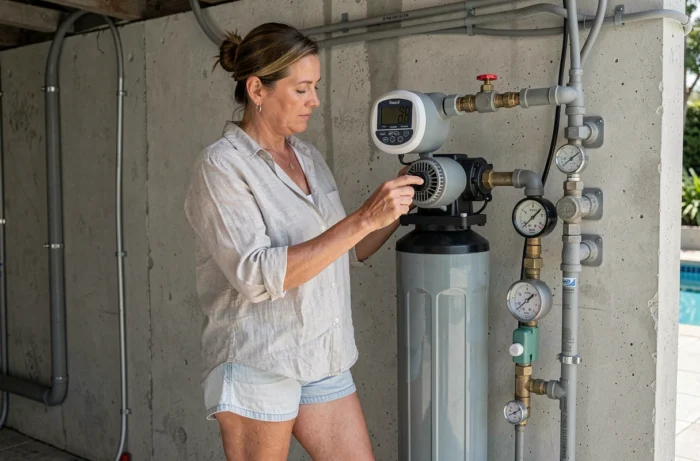
Applying a fixed filtration duration throughout the season is a common mistake. Cold water in May does not require the same circulation as water heated by a cover in the middle of summer. Several reports from saltwater pool owners show that the water turns green precisely when the temperature rises without the filtration keeping up.
Filtration must increase proportionally to the water temperature. The warmer the water, the faster microorganisms multiply, and the quicker the chlorine produced by the electrolyzer degrades under the effects of UV and heat.
When the temperature exceeds a high threshold (typically above the usual comfort zone), continuous filtration without nighttime interruption becomes relevant. This reflex is particularly useful in covered pools, where the temperature rises without the owner realizing it immediately. Adjusting the filtration duration to the pool’s usage complements this logic: the more swimmers there are, the greater the organic load increases, putting more demand on the electrolysis cell.
3. Clean the filter and pre-filters preventively
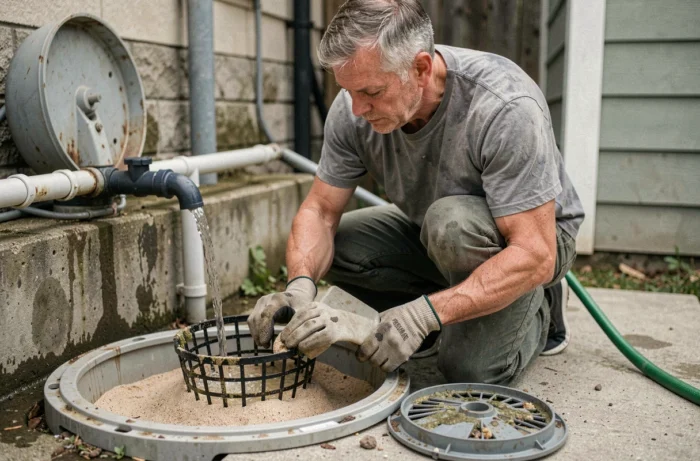
A clogged filter negates the effect of the electrolyzer. Even if chlorine is produced, if the water does not circulate properly, disinfection remains partial, and algae find dead zones to proliferate.
Prevention relies on three regular actions:
- Monitor the pressure gauge on the filter: a notable increase indicates clogging that slows the flow and reduces disinfection efficiency.
- Empty the skimmer baskets and the pump pre-filter as soon as they contain debris, without waiting for them to be full. A half-blocked basket is enough to significantly reduce the flow rate.
- Perform a backwash of the sand filter after each episode of heavy pollution: storm, influx of pollen, intensive swimming.
A clean filter is the first line of defense against green water, well before adding chemicals. This preventive maintenance takes a few minutes and avoids costly shock treatments that are aggressive to the electrolysis cell.
4. Identify green water caused by metals, not by algae
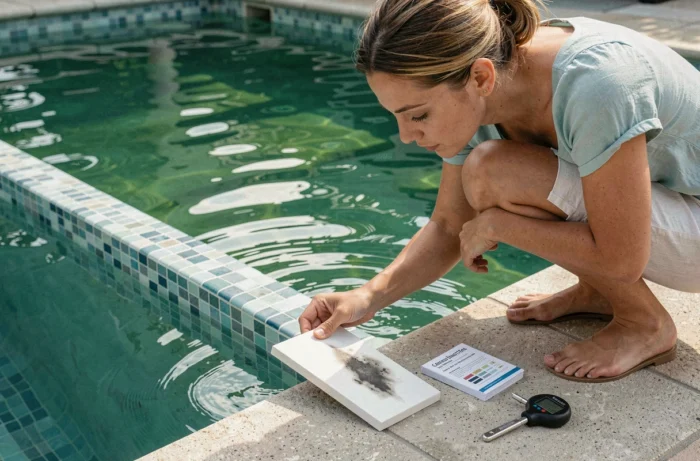
Not all green water is overrun by algae. In a saltwater pool, the coloration can come from dissolved metals, particularly iron, present in the filling water or released by corroded equipment. A shock chlorine treatment on metal-laden water exacerbates the problem instead of solving it: oxidation precipitates the metals and makes the water even cloudier.
The diagnosis involves observation. Green water due to algae is accompanied by slimy walls to the touch. Water colored by metals remains smooth, and the hue may lean towards brown or rust depending on the concentration of iron or copper.
When metals are involved, the appropriate treatment relies on a metal sequestrant, which keeps them in solution and allows the filter to capture them. Adding shock chlorine in this situation is the most counterproductive reflex, and yet it is the one that most owners adopt first.
5. Brush the walls and bottom before any chemical treatment

Not all algae float freely in the water. A large part attaches to the walls, steps, tile joints, and the bottom of the pool. Pouring a product into the pool without brushing beforehand amounts to treating the surface of the problem.
Mechanical brushing dislodges the biofilm that protects algae colonies from the action of chlorine. Once suspended, these microorganisms become accessible to disinfection and filtration. The order matters: brush first, treat next, and filter continuously during the clarification phase.
The areas to target first are those where water circulation is weakest: behind the ladder, in the corners, around the return jets, and on the waterline. This simple gesture, repeated once a week during the hot season, significantly reduces the risk of seeing the water turn between two chemical analyses.
These five levers work together. A saltwater pool with stable TA, filtration adapted to the heat, a clean filter, and regularly brushed walls leaves very little room for algae. The metal diagnosis remains the point to keep in mind to avoid triggering an unnecessary shock treatment that damages the electrolysis cell without addressing the real cause of the discoloration.